

Clear insight. Meaningful progress.
A Structured Academic Journey
The Secondary curriculum follows a clear and progressive pathway from Year 7 through to A Levels, supporting students at each stage of their academic and personal development.
Each phase builds on the previous one—developing knowledge, independence, and confidence—while preparing students for university and future pathways.
Key Stage 3 (Years 7–9)
Exploration and strong foundations.
Key Stage 3 provides a broad and balanced curriculum designed to challenge and engage every student, while supporting the development of core academic skills.
Students study a wide range of subjects, including:
• English Language and English Literature
• Mathematics
• Science
• History and Geography
• Foreign Languages (French and Spanish)
• Physical Education
• Music and Art
• Information and Communication Technology (ICT)
Students may also have the opportunity to study an additional language, such as Chinese, German, Portuguese, or Italian, or pursue further development in music.
Teaching at this stage emphasises critical thinking, problem-solving, teamwork, and independent learning, while helping students begin to identify their interests and strengths.
Thinking and Working Mathematically & Scientifically
Beyond answers. Understanding that lasts.
At our school, the Cambridge curriculum goes far beyond memorising facts or following procedures. Through Thinking and Working Mathematically and Thinking and Working Scientifically, students develop the habits of mind needed for deep understanding and lifelong learning.
In Mathematics, pupils are encouraged to recognise patterns, make connections, form conjectures, test ideas and explain their reasoning clearly. They learn that mathematics is not simply about arriving at the correct answer, but about understanding why a method works. Students are taught to approach problems logically, justify their thinking, and refine their strategies when faced with new challenges.
In Science, students develop curiosity, critical thinking and investigative skills. They learn how to ask meaningful questions, plan and carry out investigations, analyse evidence, evaluate reliability and draw reasoned conclusions. The emphasis is on scientific enquiry — understanding how knowledge is constructed — rather than simply learning scientific facts.
These approaches foster independence, resilience and intellectual confidence. Students learn to think deeply, communicate clearly, and apply their understanding in unfamiliar contexts — essential skills for upper secondary study and beyond.
English as a First Language
Clarity in language. Confidence in expression.
As a Cambridge school, we offer English as a First Language rather than English as a Foreign or Second Language.
This means our English curriculum is designed for students who are developing full academic fluency. The focus is not only on grammar and vocabulary acquisition, but on sophisticated reading, analytical writing, critical thinking and confident spoken communication.
Students engage with high-quality literature, explore a range of fiction and non-fiction texts, and learn to write with clarity, structure and style for different purposes and audiences. They are taught to analyse language carefully, construct well-supported arguments, and express complex ideas effectively.
By following the First Language pathway, our students develop the advanced literacy skills required for success in IGCSE, A Level and university study, while also building the confidence to communicate articulately in a global context.
These approaches foster independence, resilience and intellectual confidence. Students learn to think deeply, communicate clearly, and apply their understanding in unfamiliar contexts — essential skills for upper secondary study and beyond.

IGCSE Programme (Years 10–11)
Focus, depth, and academic rigour.
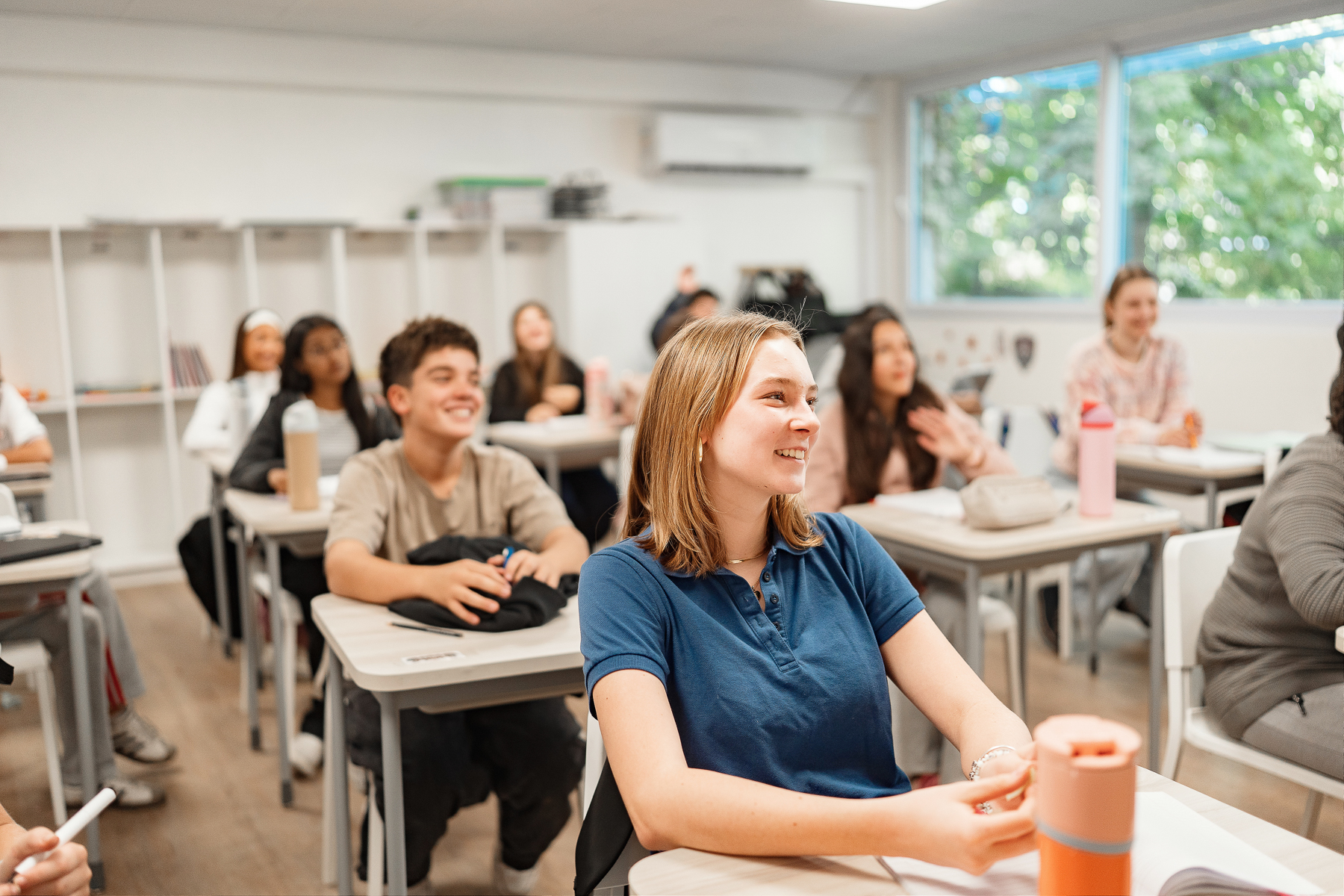
Towards the end of Year 9, students select their IGCSE subjects, guided by teachers and in close consultation with families.
Students typically study 8–9 subjects, maintaining a balanced academic programme built around a strong core, including:
• English Language and English Literature
• Mathematics
• Combined Science
Alongside a wide range of options, such as:
• Geography and History
• Modern Foreign Languages
• Information and Communication Technology (ICT)
• Business Studies and Sociology
• Drama and Music
This stage develops deeper subject knowledge, analytical thinking, and independent study skills, preparing students for advanced academic work.
Cambridge Progression Tests
Insightful assessment, without pressure.
We use Cambridge Progression Tests as part of our assessment approach because they provide valuable insight into student learning while maintaining a calm and low-stress environment.
These assessments are not high-stakes examinations. Instead, they are carefully designed diagnostic tools that help us understand how well students are developing their knowledge, skills and understanding in English, Mathematics and Science. The focus is on progress over time rather than performance on a single day.
For students, this means assessments feel purposeful but manageable. There is no culture of pressure or “teaching to the test.” Instead, pupils are encouraged to approach them with confidence, knowing they are simply another opportunity to demonstrate what they have learned.
• Track individual and cohort progress accurately
• Identify strengths and areas for development
• Inform teaching and curriculum planning
• Ensure alignment with international Cambridge standards
The combination of low stress for students and high-quality data for teachers ensures that assessment supports learning rather than drives anxiety.
A Level Programme (Years 12–13)
Specialisation and university preparation.
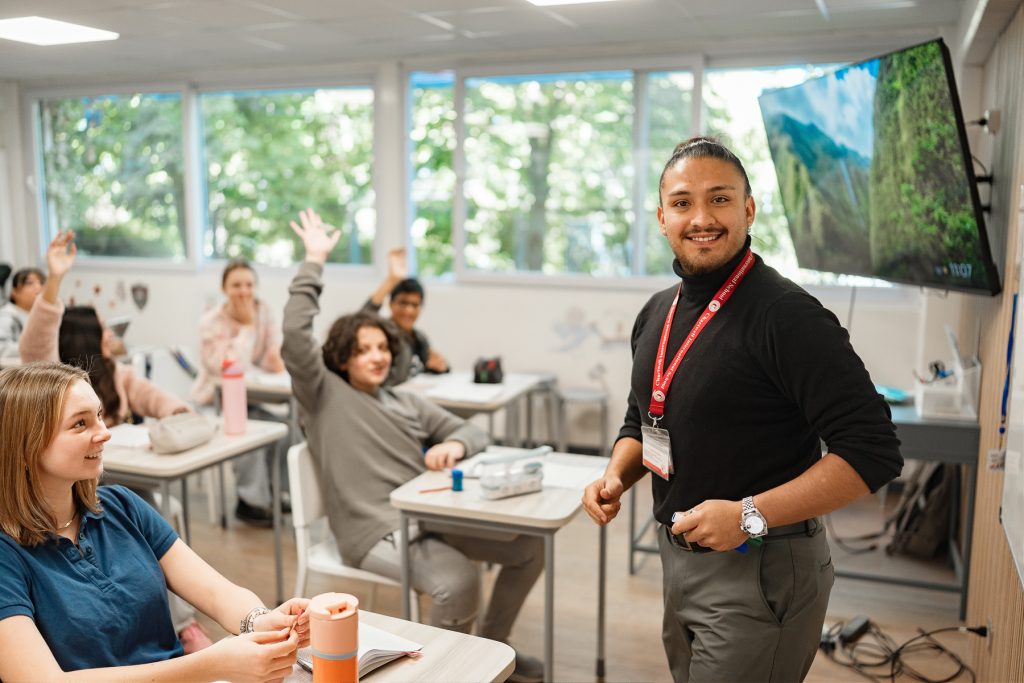
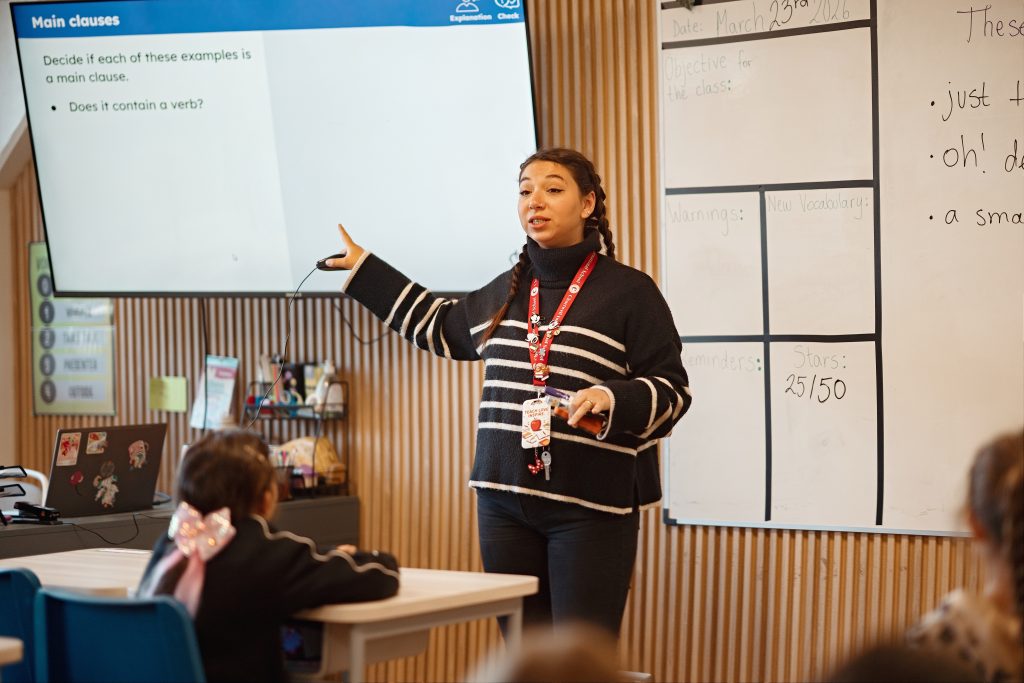
In the final stage of Secondary education, students undertake AS and A Level qualifications as part of the Cambridge Advanced programme.
Students specialise in a smaller number of subjects, allowing for in-depth study aligned with their intended university and career pathways.
These internationally recognised qualifications are highly regarded by leading universities worldwide and provide excellent preparation for higher education.
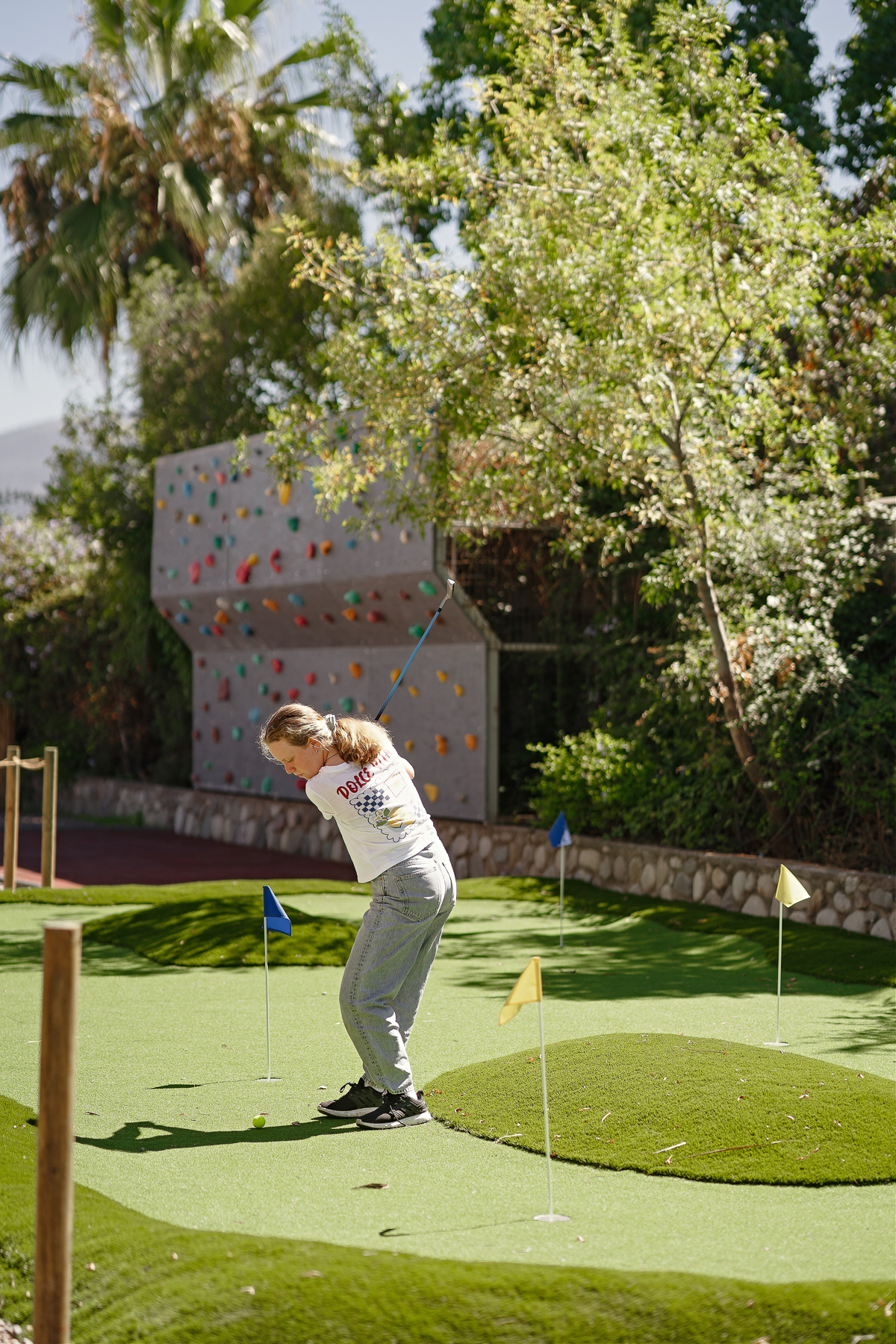
Physical Education and Wellbeing
Physical education remains an important part of the curriculum, with students participating regularly in sport and physical activity.
This supports overall wellbeing, teamwork, and the development of a healthy and balanced lifestyle.
A Guided and Personalised Pathway
Students receive continuous academic guidance throughout Secondary School, particularly during subject selection and key transition points.
Decisions are made in close collaboration with teachers and families, ensuring that each student follows a pathway suited to their strengths, interests, and long-term aspirations.