
Education, enriched.
Pre-School Enrichment Programme
In Pre-School, enrichment is thoughtfully designed around play-based learning, recognising that young children learn best through exploration, movement, and hands-on experiences.
A carefully structured weekly timetable introduces children to a balanced variety of activities, typically delivered in afternoon sessions, allowing them to experience different areas of development across the week.
Children engage in activities such as No-Bake Cooking, Gardening, STEAM, Dance, Chess, Sports Enrichment, and Creative LEGO® Building, each designed to support early development in a fun and nurturing environment.
Through these experiences, children develop fine and gross motor skills, coordination, creativity, and early problem-solving abilities. Just as importantly, they build confidence, learn to collaborate, and begin to express themselves within a safe and supportive setting.
Outdoor and nature-based activities such as gardening foster curiosity and a connection to the environment, while creative and movement-based sessions support imagination, rhythm, and self-expression.
At this stage, enrichment is not about specialisation, but about exposure and discovery, creating joyful first experiences that lay the foundation for future learning.


Primary Enrichment Programme
In Primary School, enrichment expands into a broad and dynamic programme, supported by a structured weekly timetable across campuses, offering students the opportunity to explore a wide range of interests.
Activities are typically scheduled throughout the week, with additional options such as football training sessions on Saturdays, allowing for continuity, progression, and deeper engagement.
Students participate in a diverse selection of activities, including:
- Sport & Physical Development: Football, Basketball, Hockey, Dance, Gymnastics
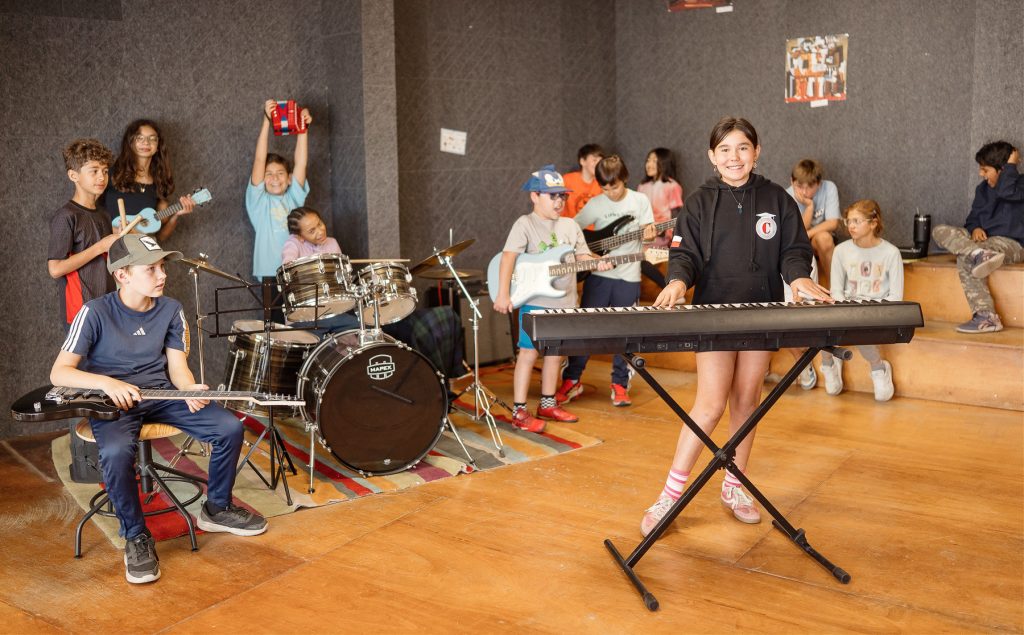
- Creative & Performing Arts: Arts & Recycled Crafts, Music Ensemble, Dance
- Innovation & STEAM: Robotics, Motorised LEGO® Engineering, Chess
- Language Development: English Club, Spanish Club
- Hands-on & Nature-Based Learning: Gardening, Cooking
Each activity is designed to develop specific skills while also encouraging teamwork, independence, and confidence.
For example, robotics and LEGO® programmes introduce students to engineering concepts and logical thinking, while creative disciplines allow for artistic expression and confidence-building. Language clubs support communication skills in a multilingual environment, and sports programmes develop discipline, resilience, and collaboration.
The timetable structure allows students to commit to activities over a full semester, ensuring continuity, progression, and meaningful skill development over time.
At this stage, enrichment supports students in discovering their interests, building confidence, and beginning to develop areas of strength.
Secondary Enrichment Programme
In Secondary School, enrichment becomes more specialised and purposeful, with a timetable that supports both skill development and long-term progression.
Students have access to a wide range of activities across the week, including extended training sessions and weekend opportunities, particularly within competitive sports programmes such as football.
The programme includes:
- Competitive Sport: Football, Basketball, Hockey, Baseball, Climbing, Gymnastics
- Creative & Performing Arts: Drama & Performing Arts, Dance, Music Ensembles
- Innovation & Technology: Robotics, LEGO® Engineering, STEAM-based programmes
- Creative Disciplines: Arts & Recycled Crafts, Weaving
- Strategic & Cognitive Development: Chess
Activities are designed to move beyond introduction, allowing students to refine skills, build discipline, and develop a deeper level of commitment.
Programmes such as robotics and engineering develop advanced problem-solving and collaboration skills, while performing arts build confidence, expression, and stage presence. Competitive sports emphasise teamwork, resilience, and leadership, with structured training and regular practice.
The timetable structure, including after-school and Saturday sessions, allows students to engage consistently and work towards meaningful goals and performance outcomes.
At this stage, enrichment plays a key role in shaping well-rounded individuals, while also contributing to university readiness and personal development, helping students build strong profiles and a clear sense of direction for their future.